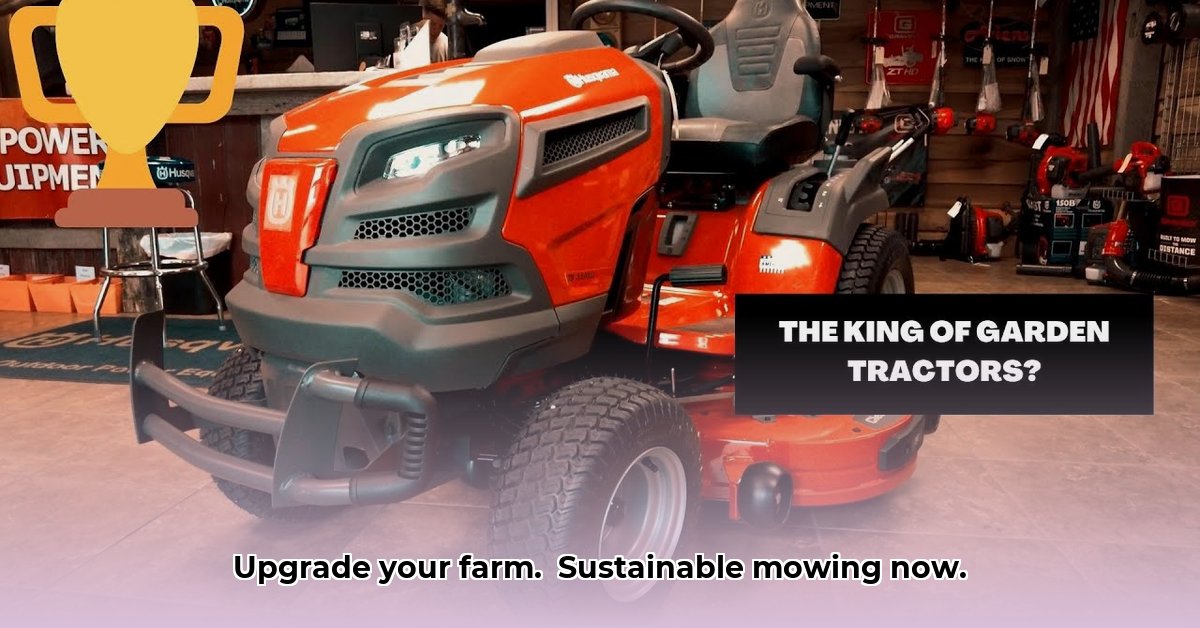
Husqvarna Ride-On Mowers: Sustainable Power for Modern Farming
Farming demands efficiency and sustainability. Long hours and tight margins necessitate smart solutions. Husqvarna ride-on tractor mowers offer a powerful combination of productivity and environmental responsibility, helping you cultivate a thriving operation while minimizing your environmental footprint. These aren't just mowers; they're tools for building a more sustainable future. For more options, check out these other riding mowers.
Maximizing Farm Productivity: Beyond the Cutting Edge
Imagine this: you're covering acres in a fraction of the time, freeing up valuable hours for planting, tending crops, and harvesting. That's the power of a Husqvarna ride-on mower. Built for durability and long-term performance, these machines minimize downtime and expensive repairs, translating to substantial long-term cost savings. But choosing the right model is crucial.
Selecting Your Ideal Husqvarna Mower: A Practical Guide
Finding the perfect Husqvarna mower isn't about choosing the shiniest; it's about selecting the machine that precisely meets your needs. This step-by-step guide helps you find your perfect match:
Assess Your Land: Acreage dictates mower size. Smaller farms (under 5 acres) benefit from compact, maneuverable models, while larger operations (over 20 acres) require larger, high-capacity mowers.
Analyze Your Terrain: Uneven land requires robust models with excellent traction and maneuverability. Flat fields can use standard models.
Set a Realistic Budget: Husqvarna offers models at various price points. Define your budget beforehand to streamline your search.
Prioritize Essential Features: Consider features like large grass catchers, mulching capabilities, and advanced technologies like GPS guidance. Think about which features will maximize your efficiency and soil health.
Test Drive (If Possible): Testing different models gives you firsthand experience with handling, power, and comfort.
Here's a comparative table highlighting key features for various farm sizes:
| Feature | Small Farm (Under 5 Acres) | Medium Farm (5-20 Acres) | Large Farm (Over 20 Acres) |
|---|---|---|---|
| Mower Size | Compact, maneuverable | Versatile, moderate size | Large, high-capacity |
| Engine Power (HP) | 15-20 | 20-30 | 30+ |
| Cutting Deck Width (in) | 30-42 | 42-54 | 54+ |
| Key Features | Ease of use, fuel efficiency | Mulching, bagging | Advanced tech, high power |
Isn't efficient mowing a worthwhile investment for your farm’s future? The long-term cost savings from reduced maintenance and increased productivity are significant.
Sustainable Farming Practices: Extending the Reach of Sustainability
Choosing a Husqvarna mower is just the beginning of a sustainable farming approach. These additional strategies enhance your commitment to environmental stewardship:
Fuel Efficiency: Strategically plan your mowing to minimize fuel consumption. Proper mower maintenance ensures optimal engine performance.
Responsible Fuel Disposal: Dispose of used fuel properly, following local waste management guidelines. This prevents soil and water contamination.
Preventative Maintenance: Regular maintenance (oil changes, blade sharpening, belt inspections) extends mower lifespan, significantly reducing waste and replacement costs.
End-of-Life Management: Explore recycling options for your mower when it reaches the end of its life, minimizing landfill waste. Many manufacturers offer parts recycling programs.
Reducing the Environmental Impact of Riding Lawn Mowers: A Comprehensive Guide
Key Takeaways:
- Mower selection significantly impacts environmental sustainability.
- Efficient operation minimizes fuel use and emissions.
- Regular maintenance extends mower lifespan and reduces waste.
- Sustainable fuel choices and proper disposal are crucial.
- Husqvarna offers models designed with environmental responsibility in mind.
Gas-powered riding mowers, while powerful, have environmental implications. Let's explore how to minimize your impact. Sustainable practices are within reach.
Choosing an Eco-Conscious Mower: Prioritizing Efficiency
Fuel efficiency is paramount. Husqvarna offers several options: battery-powered models eliminate tailpipe emissions, while many gas-powered models incorporate advanced engine technology resulting in lower emissions than older models. Consider these factors:
| Feature | Impact on Environmental Impact |
|---|---|
| Electric Motor | Significantly reduces greenhouse gas emissions and air pollution. |
| Engine Technology | Newer engines offer improved fuel efficiency and lower emissions. |
| Cutting Deck Design | Efficient cutting minimizes fuel consumption and reduces wear and tear. |
| Hydrostatic Transmission | Smoother operation, reduced wear, and potentially better fuel economy |
Before purchasing, compare models' fuel efficiency and emissions ratings.
Efficient Operation: Optimizing Every Mowing Session
Responsible use makes a difference:
- Plan your route: Efficient mowing minimizes overlaps and wasted fuel.
- Maintain proper cutting height: Taller grass shades the soil, conserving moisture, and reduces mower workload.
- Sharp blades: Dull blades require more power, increasing fuel use.
- Avoid over-revving: Excessive speed increases fuel consumption without improving cut quality.
Maintenance: An Investment in Sustainability
Regular maintenance extends mower lifespan, reducing the need for replacements (and associated manufacturing emissions). Follow the manufacturer's guidelines, check fluids regularly, inspect components, and store the mower properly.
Responsible Fuel Use and Disposal: Minimizing Contamination
- Store fuel correctly to prevent spills.
- Consider alternative fuels (if compatible).
- Dispose of used oil and fuel according to local regulations.
This prevents soil and groundwater contamination.
Beyond the Mower: Holistic Landscape Management
Sustainable landscaping extends beyond the mower. Consider:
- Reducing lawn size.
- Using mulch to enrich soil and reduce fertilizer needs.
- Choosing native plants.
By implementing these strategies, you can significantly reduce the environmental impact of your lawn care, contributing to a greener and more sustainable future.